
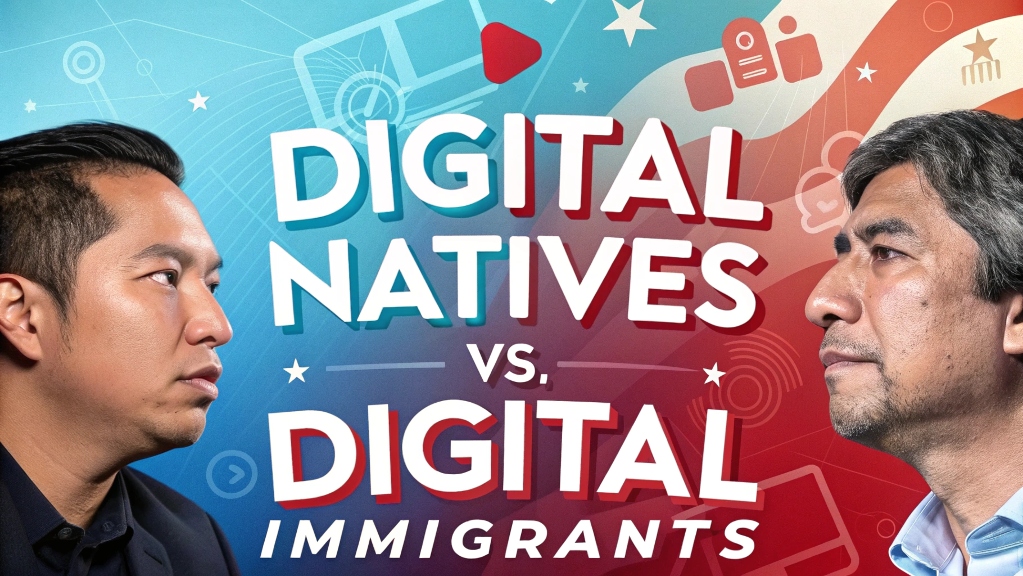
The hum of the internet, the glow of screens, and the constant flow of information have become the bedrock of modern existence. For some, this digital landscape is a natural habitat, as familiar as breathing. For others, it’s a newly discovered country, full of wonders and bewildering complexities. This fundamental difference gives rise to a fascinating and increasingly relevant cultural divide: that between Digital Natives and Digital Immigrants.
This isn’t merely a technological gap; it’s a profound cultural chasm impacting communication, learning, work, and even social interactions. Understanding this distinction is crucial for fostering collaboration, empathy, and progress in our increasingly interconnected world.
Defining the Generations: Who Are They?
The terms, coined by educational futurist Marc Prensky in 2001, offer a compelling framework for understanding this generational divide:
- Digital Natives: Generally, this group encompasses individuals born roughly from the early 1980s onwards, who have grown up entirely immersed in the digital age. They are the internet generation, the smartphone generation, the social media generation. Technology isn’t a tool they learned to use; it’s an intrinsic part of their environment, shaping their cognitive processes, expectations, and perceptions of the world. They’ve never known a world without the internet, email, or instant messaging.
- Digital Immigrants: This group comprises individuals born before the widespread adoption of digital technology. They are “immigrants” to the digital world, having had to adapt and learn new “languages” and customs to navigate this new territory. While many are incredibly proficient users of technology, their fundamental approach to information, communication, and even problem-solving often differs from that of digital natives because they learned these skills later in life. They remember a time before Google, before cell phones, and before social media dictated trends.

The Underlying Cultural Differences: More Than Just Tech Savvy
The distinction goes far beyond mere technical proficiency. It delves into ingrained cultural norms, cognitive styles, and even brain development.
Information Processing and Learning:
-
- Digital Natives are often characterized by their ability to multitask, process information rapidly from multiple sources, and embrace non-linear learning. They are adept at “grazing” for information, quickly sifting through vast amounts of data to find what they need. Their learning is often highly experiential and collaborative, thriving in environments that offer immediate feedback and interactive elements. They prefer visual over textual information and learn best through discovery and experimentation.
- Digital Immigrants, having grown up with more traditional forms of learning, often prefer a more linear, sequential approach to information. They might prefer reading a book cover-to-cover, absorbing information systematically. While they can adapt to digital learning, they may still gravitate towards structured environments and may find the constant barrage of information overwhelming. They often value in-depth analysis and critical thinking developed through more concentrated, singular focus.
Communication Styles:
For Digital Natives, communication is often instant, informal, and multimedia-rich. They are comfortable with emojis, acronyms, GIFs, and short-form text messages. They seamlessly transition between various communication platforms – WhatsApp, Instagram DMs, Snapchat, TikTok – often simultaneously. Their social interactions are frequently mediated through digital platforms, where immediacy and brevity are key.
-
- Digital Immigrants often lean towards more formal, structured communication. They might prefer email over instant messaging for professional correspondence, or a phone call over a text for personal matters. While they have adopted digital communication, their communication style often retains elements of their pre-digital upbringing, valuing clear, grammatically correct language and more explicit communication of intent.
Relationship with Technology:
-
- Digital Natives view technology as an extension of themselves. It’s not just a tool; it’s an integral part of their social lives, their identities, and their understanding of the world. They are comfortable with constant connectivity, often feeling a sense of unease or even anxiety when disconnected. They are innovators and early adopters, always seeking out the latest trends and features.
- Digital Immigrants tend to view technology as a tool to achieve specific tasks. While they appreciate its convenience and efficiency, they may also harbor a degree of caution or skepticism towards its pervasive influence. They might be more concerned about privacy, screen time, and the potential negative impacts of constant connectivity. They often prioritize functionality and reliability over novelty.
Problem-Solving Approaches:
-
- Digital Natives often approach problems with a “trial and error” mindset, leveraging online resources, collaborative tools, and their innate comfort with experimentation. They are quick to search for solutions online and are accustomed to finding answers almost instantaneously. Their problem-solving is often iterative and adaptable.
- Digital Immigrants, due to their upbringing in a less information-saturated world, might rely more on established methods, expert consultation, or their own prior knowledge. They may be more inclined to delve deeply into a problem before seeking external assistance, and might prefer structured learning to arrive at solutions.
Bridging the Chasm: Strategies for a Harmonious Digital Future
Recognizing these differences is the first step towards bridging the divide. Rather than viewing these groups as inherently incompatible, we should strive to leverage their unique strengths for mutual benefit.
In Education:
-
- Embrace Blended Learning: Combine traditional pedagogical methods with interactive, technology-rich learning experiences.
- Foster Collaborative Learning: Encourage peer-to-peer learning where digital natives can mentor digital immigrants in technology, and immigrants can share their wisdom and critical thinking skills.
- Personalize Learning Paths: Cater to different learning styles and preferences by offering diverse content formats (video, interactive simulations, text) and paces.
- Teach Digital Literacy and Critical Thinking: Equip both groups with the skills to discern credible information, understand digital ethics, and navigate the complexities of the online world.
The Workplace:
-
- Promote Reverse Mentoring: Encourage younger employees to mentor older colleagues on new technologies, social media, and digital trends. This empowers digital natives and provides valuable insights for digital immigrants.
- Foster Cross-Generational Teams: Create teams with a mix of digital natives and immigrants. This allows for diverse perspectives, problem-solving approaches, and a richer exchange of knowledge.
- Invest in Continuous Learning: Provide ongoing training and development opportunities that cater to various learning styles and technological comfort levels.
- Adapt Communication Strategies: Use a variety of communication channels to ensure messages reach everyone effectively. Be mindful of preferences and tailor messages accordingly. For example, a detailed email might be followed up with a quick chat message.
Society:
-
- Promote Intergenerational Dialogue: Encourage conversations that foster understanding and empathy between different age groups regarding their experiences with technology.
- Develop Inclusive Digital Services: Design digital platforms and services that are intuitive and accessible to a wide range of users, regardless of their digital fluency.
- Focus on Shared Values: While approaches may differ, the underlying goals of communication, collaboration, and progress are universal. Emphasize these shared objectives to build common ground.
Conclusion: Towards a Digitally Inclusive Future
The cultural divide between digital natives and digital immigrants is not a barrier to be overcome, but rather a dynamic force to be understood and harnessed. By acknowledging the unique strengths and perspectives each group brings, we can create more inclusive educational environments, more productive workplaces, and a more harmonious society.
The future is undeniably digital. By fostering empathy, encouraging mutual learning, and adapting our approaches to communication and collaboration, we can bridge this generational chasm, ensuring that everyone, regardless of their digital origin story, can thrive in our increasingly connected world. The goal isn’t to erase the differences, but to celebrate them and build a future where the strengths of both digital natives and digital immigrants coalesce to drive innovation and progress.
Related Topics:
Beyond the Horizon: How 5G, Quantum Computing, and Emerging Tech are Reshaping Our World
The Future is Now: Exploring Autonomous Drone Delivery Networks