

Are you feeling the shift? The subtle, yet undeniable, hum of artificial intelligence permeating every corner of our professional lives? It’s not science fiction anymore; it’s the present, and it’s exhilarating. From automating mundane tasks to sparking unprecedented creativity, AI tools are no longer a luxury but a fundamental catalyst for enhanced productivity, streamlined business operations, and groundbreaking innovation. Forget the dystopian narratives; the reality is far more empowering. AI is not here to replace us, but to amplify us, freeing up valuable human capital for more strategic, complex, and deeply human endeavors.
The modern workplace, once defined by repetitive manual processes and limited analytical capabilities, is undergoing a profound metamorphosis. Organizations that embrace AI are gaining a significant competitive edge, optimizing workflows, and unlocking insights previously hidden within vast datasets. This article will delve into the diverse landscape of AI tools, exploring how they are fundamentally changing the way we work, fostering efficiency, and shaping the future of work.
The Dawn of Automated Efficiency: Streamlining Core Operations
One of the most immediate and impactful changes brought about by AI is the rise of automation. Repetitive, rule-based tasks that once consumed countless hours are now being intelligently handled by AI-powered systems, leading to remarkable gains in operational efficiency.
Robotic Process Automation (RPA), powered by AI, is at the forefront of this transformation. Imagine software robots diligently handling data entry, processing invoices, or managing customer onboarding paperwork. This isn’t just about speed; it’s about accuracy and consistency, drastically reducing human error and freeing up employees from tedious chores. This liberation allows teams to dedicate their energy to higher-value activities that require critical thinking, problem-solving, and creativity.
Beyond RPA, AI is revolutionizing administrative tasks in numerous ways:
- Smart Scheduling and Calendar Management: AI-powered scheduling tools like Reclaim.ai optimize meeting times across multiple calendars, consider time zone differences, and even suggest ideal slots for focused work, leading to better time management and reduced scheduling conflicts.
- Intelligent Email Management: AI-driven email filters and routing systems can automatically sort, prioritize, and even draft responses to routine inquiries, significantly cutting down on administrative burdens and improving response times. This is especially beneficial for customer support teams, allowing them to focus on complex customer issues.
- Automated Data Collection and Analysis: AI excels at sifting through vast amounts of data, identifying patterns, and generating actionable insights far more quickly and accurately than human analysts. This enhances data analysis capabilities across all departments, from sales forecasting to market research, leading to more informed decision-making.
The immediate benefit of these automation tools is a palpable increase in employee satisfaction. When individuals are no longer bogged down by monotonous work, they can engage in more fulfilling and impactful projects, boosting morale and fostering a more dynamic work environment.
Enhancing Human Capabilities: From Content Creation to Strategic Insights
AI’s impact extends far beyond mere automation. It’s becoming an indispensable partner in enhancing human capabilities, enabling us to achieve more, create more, and understand more.
Revolutionizing Content Creation and Marketing
For marketers, writers, and content creators, AI tools are a game-changer. They are not replacing human creativity but rather augmenting it, enabling faster ideation, drafting, and optimization.
- AI-Powered Writing Assistants: Tools like Jasper, Copy.ai, and Grammarly are transforming the way we write. They can generate various types of content, from social media posts and ad copy to blog outlines and entire articles. These AI writing tools assist with grammar, style, tone, and even plagiarism checks, ensuring high-quality, engaging, and unique content. They act as brainstorming partners, helping to overcome writer’s block and accelerate the content creation process.
- Visual Content Generation: AI image generators such as DALL-E and Midjourney are democratizing graphic design, allowing users to create stunning visuals from simple text prompts. This empowers businesses of all sizes to produce compelling marketing materials without extensive design expertise. Canva, with its integrated AI features, further simplifies visual content creation.
- Video and Audio Editing with AI: Tools like Descript and Synthesia are revolutionizing video and audio production. Descript allows users to edit audio and video by simply editing the transcribed text, while Synthesia enables the creation of realistic AI-generated avatars for professional video presentations, saving significant time and resources. These AI creative tools open up new avenues for rich media content.
These tools empower individuals and teams to produce a higher volume of diverse content, maintain brand consistency, and tailor messages to specific audiences with unprecedented precision, leading to more effective marketing strategies.
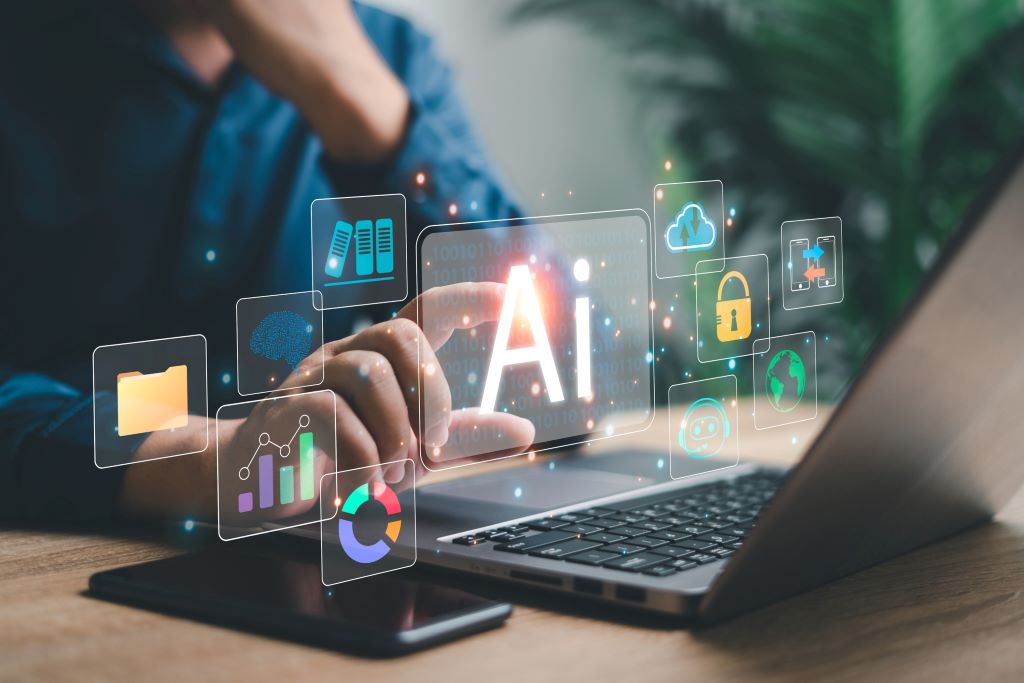
Powering Data-Driven Decision Making
The sheer volume of data generated by modern businesses is staggering. AI is the key to transforming this raw data into valuable insights, driving smarter and faster decisions.
- Predictive Analytics: AI algorithms can analyze historical data to predict future trends, from sales forecasts and customer behavior to equipment failures in manufacturing. This AI-driven insights capability allows businesses to proactively address challenges and seize opportunities.
- Enhanced Business Intelligence (BI): AI integrates with BI platforms to provide deeper, more nuanced analyses of business performance. It can identify correlations, anomalies, and underlying patterns that human analysis might miss, offering a holistic view of operations and facilitating strategic decision-making.
- Customer Relationship Management (CRM) with AI: AI-powered CRM systems analyze customer interactions to personalize experiences, predict customer needs, and optimize sales funnels. Chatbots, often powered by AI, provide 24/7 customer support, improving response times and customer satisfaction. This focus on customer engagement is crucial for building lasting relationships.
By providing real-time, actionable intelligence, AI is empowering leaders to make data-backed decisions, fostering agility and responsiveness in a rapidly changing market.
AI Across Industries: A Glimpse into the Revolution
The transformative power of AI is not limited to specific departments; it’s permeating every industry, creating new possibilities and redefining existing paradigms.
- Healthcare: AI is revolutionizing diagnostics, personalizing treatment plans, and accelerating drug discovery. From image analysis for early disease detection to predictive models for patient outcomes, AI is enhancing healthcare delivery.
- Finance: AI is crucial for fraud detection, risk assessment, and algorithmic trading. It allows financial institutions to process vast amounts of transaction data, identify suspicious activities, and make real-time decisions, strengthening security and improving investment strategies.
- Manufacturing: AI-driven quality control, predictive maintenance, and supply chain optimization are enhancing efficiency and reducing waste in manufacturing processes. AI can analyze sensor data to anticipate equipment failures, minimizing downtime and optimizing production.
- Education: Personalized learning platforms powered by AI adapt to individual student needs, offering customized learning paths and intelligent tutoring systems. AI can identify learning gaps and provide targeted resources, making education more effective and accessible.
These are just a few examples; the applications of AI are constantly expanding, promising a future of unprecedented growth and societal benefit.
Navigating the AI Landscape: Challenges and Opportunities
While the benefits of AI are undeniable, its adoption also presents certain challenges that organizations must proactively address.
- Data Quality and Privacy: AI models are only as good as the data they’re trained on. Ensuring high-quality, unbiased, and ethically sourced data is paramount. Privacy concerns surrounding the collection and use of personal data also require robust safeguards and transparent policies.
- Skill Gaps and Workforce Reskilling: The integration of AI necessitates a workforce with new skills. Organizations need to invest in training and development programs to equip employees with the knowledge and abilities required to work alongside AI tools, focusing on skills like AI literacy, critical thinking, and complex problem-solving. This creates an opportunity for upskilling and reskilling initiatives.
- Ethical Considerations and Bias: AI algorithms can perpetuate or even amplify existing biases present in their training data. Ensuring fairness, transparency, and accountability in AI systems is crucial to prevent discriminatory outcomes and build trust. Responsible AI development and deployment are not just good practice; they are essential for societal well-being.
- Integration with Existing Systems: Seamlessly integrating new AI tools with legacy IT infrastructure can be a complex undertaking. Organizations need a strategic approach to ensure compatibility and avoid data silos.
Despite these challenges, the opportunities presented by AI far outweigh the hurdles. Businesses that embrace AI strategically can unlock unprecedented levels of efficiency, innovation, and competitive advantage. The key lies in a thoughtful and human-centric approach to AI adoption, focusing on collaboration between humans and intelligent machines.
The Future is Collaborative: Humans and AI Working in Harmony
The narrative of AI replacing human workers is largely a misconception. Instead, the real power of AI lies in its ability to augment human intelligence, creating a synergistic relationship where the strengths of both are maximized. AI handles the repetitive, data-intensive tasks, while humans focus on creativity, critical thinking, emotional intelligence, and complex problem-solving areas where human ingenuity remains unparalleled.
This collaborative future demands a shift in mindset. We are moving towards a workplace where humans are empowered by AI, not replaced by it. It’s a future of enhanced roles, greater job satisfaction, and a renewed focus on what makes us uniquely human.
Read More: Best Productivity Software for Remote Workers in 2025
Ready to Empower Your Workforce with AI?
The revolution is here, and it’s accelerating. Don’t be left behind. Explore the vast potential of AI tools to transform your organization, boost team productivity, and drive sustainable growth. From intelligent automation to cutting-edge content creation, the right AI solutions can unlock unparalleled efficiency and innovation.